

What Is Appian Used For: Features, Reviews & Alternatives
Low-code automation platform for business.
Editorially updated Oct 25, 2025
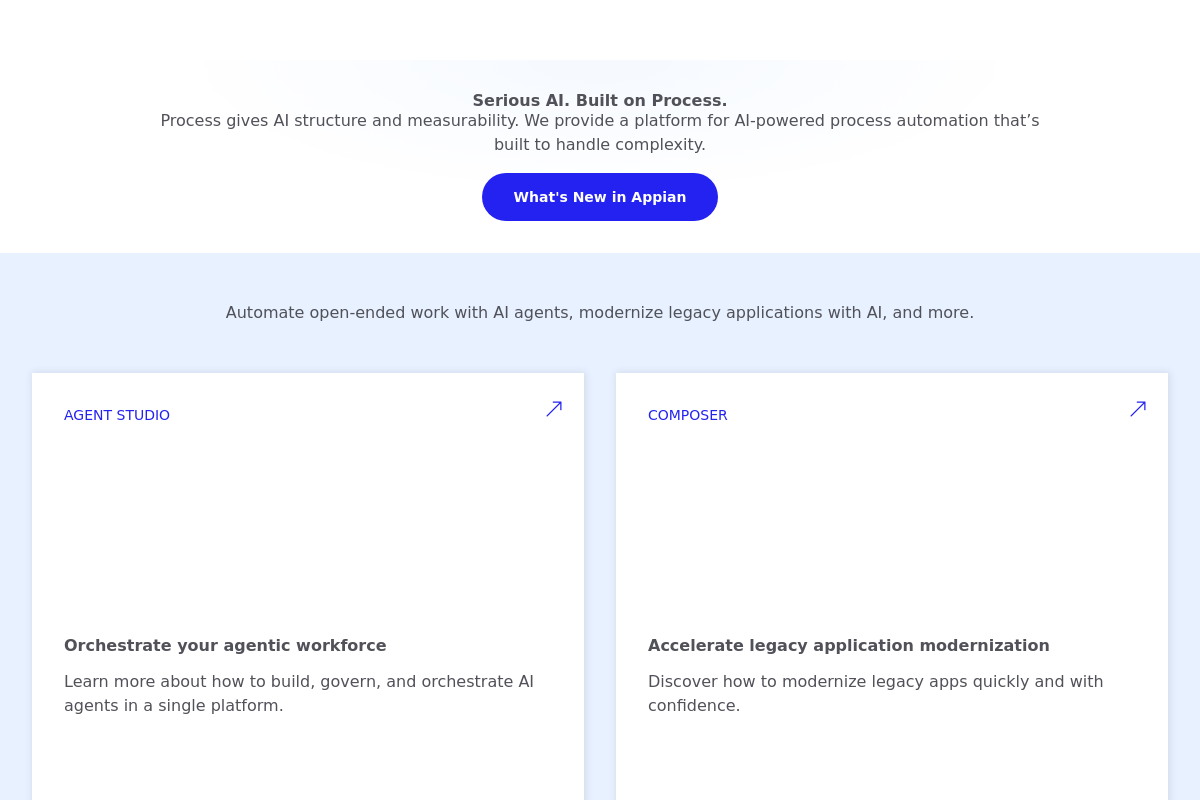
The overview
What Appian is for
1Core Capabilities
- Drag-and-drop interface for building process models
- Automated case management with dynamic task routing
- Real-time data capture and validation within forms
- Pre-built connectors for enterprise systems like SAP and Salesforce
- Configurable business rules engine for decision automation
Who it helps
Useful ways to use Appian
A practical path
Access the Appian Platform
Navigate to appian.com and sign up for an account or log in to your existing dashboard to begin building automation solutions.
External signals
Reviews & reputation
Aggregated review score
This pass shows Appian fitting strongest workflows where workflow completion quality is measurable and maintenance overhead and process drift controls are documented.
Quick answers
Frequently asked questions
1How is Appian priced for business automation projects?⌄
Appian typically uses a subscription model based on the number of users and application complexity. Pricing may vary depending on deployment options and additional modules, so direct consultation with sales is recommended for accurate estimates.
2Can Appian integrate with existing enterprise systems and databases?⌄
Appian supports integration with various enterprise systems through APIs, connectors, and data services. However, compatibility depends on the specific technologies in use and may require custom configuration or middleware.
3What user permission controls does Appian provide for managing access?⌄
Appian offers role-based access controls allowing administrators to define user permissions at granular levels, including application, process, and data access. The exact scope of permissions can be tailored to organizational policies.
4How does Appian handle data privacy and compliance requirements?⌄
Appian includes features to support data privacy such as encryption, audit logs, and compliance with common standards. Organizations should verify that the platform meets their specific regulatory obligations before deployment.
5What are the limitations of Appian in automating complex business processes?⌄
While Appian is designed for low-code automation, highly specialized or legacy processes may require additional customization or external tools. Evaluators should assess whether the platform’s capabilities align with their process complexity and integration needs.
Keep exploring