

What Is AWS Data Exchange Used For: Features, Reviews & Alternatives
Find, subscribe to, use third-party data on AWS.
Editorially updated Oct 25, 2025
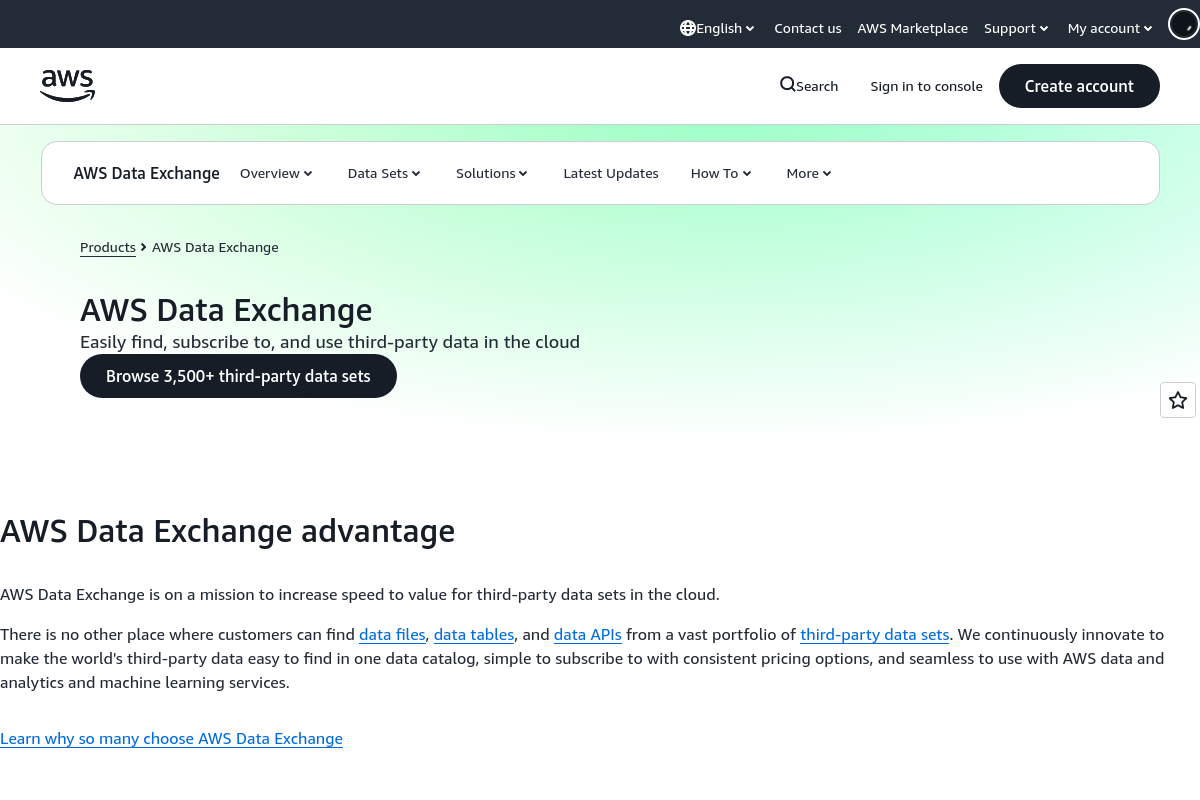
The overview
What AWS Data Exchange is for
1Core Capabilities
- Operational controls
- Reporting views
- Bulk management options
2Advanced Workflow
- Import and export paths
- Automation hooks
- Account and access settings
Who it helps
Useful ways to use AWS Data Exchange
A practical path
Open the core workflow
Start with the primary task this website tool is known for, review the default options, and confirm the main setup path.
External signals
Reviews & reputation
Aggregated review score
AWS Data Exchange is a practical website tool option with a balanced feature set and solid day-to-day usability for most teams.
Quick answers
Frequently asked questions
1Is AWS Data Exchange suitable for beginners?⌄
AWS Data Exchange is generally approachable for first-time users if they begin with one focused workflow. Start small, use templates, and expand to advanced scenarios once the team is comfortable with the core process.
2How is the review score for AWS Data Exchange generated?⌄
This score is generated from currently available review signals and structured product metadata, then normalized into a consistent 5-point scale. It is updated over time as additional trusted sources become available.
3Can AWS Data Exchange support team collaboration at scale?⌄
Yes, AWS Data Exchange can support collaboration if you define clear ownership, shared templates, and review checkpoints. Most teams get better results when they standardize naming and workflow conventions early.
4What should I validate before adopting AWS Data Exchange deeply?⌄
Validate integration fit, output quality, operational reliability, and onboarding effort for your team. A short pilot period with measurable outcomes is the best way to confirm long-term adoption value.
Keep exploring