

What Is Binance Used For: Features, Reviews & Alternatives
Largest crypto exchange by volume.
Editorially updated Oct 5, 2025
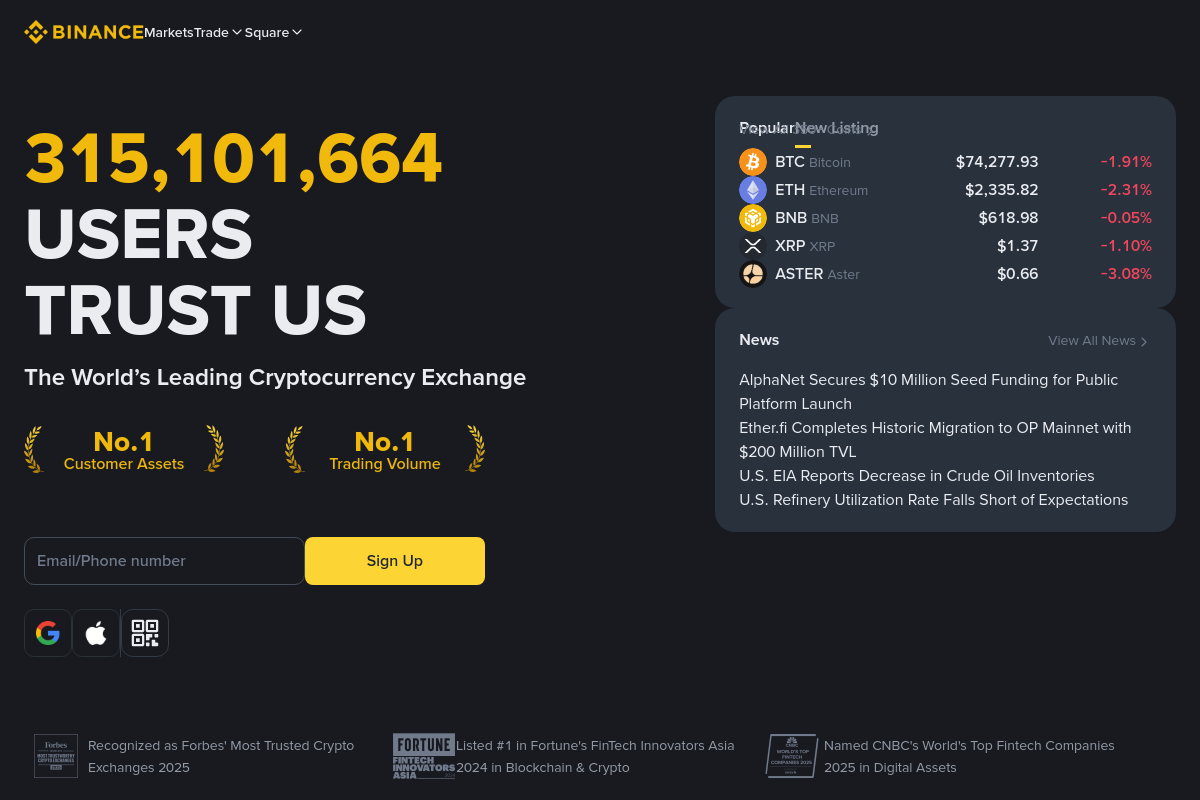
The overview
What Binance is for
1Core Capabilities
- Spot and futures trading with extensive cryptocurrency pairs
- Fiat on-ramps supporting multiple currencies and payment methods
- Advanced order types including limit, market, stop-limit, and OCO
- Two-factor authentication and withdrawal whitelist for account security
- Real-time market data and price charts with customizable intervals
Who it helps
Useful ways to use Binance
A practical path
Access the Trading Interface
Navigate to the Markets section on Binance to view available cryptocurrency pairs. Use filters to select assets based on volume, price, or market cap relevant to your trading strategy.
External signals
Reviews & reputation
Aggregated review score
This pass shows Binance fitting strongest workflows where workflow completion quality is measurable and maintenance overhead and process drift controls are documented.
Quick answers
Frequently asked questions
1What fees should I expect when trading on Binance?⌄
Binance charges trading fees based on a tiered structure linked to your 30-day trading volume and BNB holdings. Maker and taker fees vary, and additional fees may apply for withdrawals depending on the cryptocurrency.
2How complex is the account verification process on Binance?⌄
Account setup requires identity verification that includes submitting government-issued ID and possibly proof of address. Verification levels affect withdrawal limits and access to certain features, with higher tiers requiring more documentation.
3What are the main risks a cautious user should consider before using Binance?⌄
Users should evaluate regulatory compliance in their jurisdiction, potential exposure to market volatility, and the security measures Binance employs. Understanding withdrawal limits and the process for account recovery is also critical.
4Can I control permissions for multiple users or sub-accounts on Binance?⌄
Binance offers sub-account functionality primarily for institutional users, allowing some permission controls. However, granular user role management is limited compared to enterprise-grade platforms.
5How does Binance handle privacy and data protection?⌄
Binance collects personal data for compliance and security purposes. Users should review Binance’s privacy policy to understand data usage, storage, and sharing practices, especially regarding third-party integrations.
Keep exploring