
What Is Boxes and Arrows Used For: Features, Reviews & Alternatives
Peer-written journal dedicated to design.
Editorially updated Oct 5, 2025
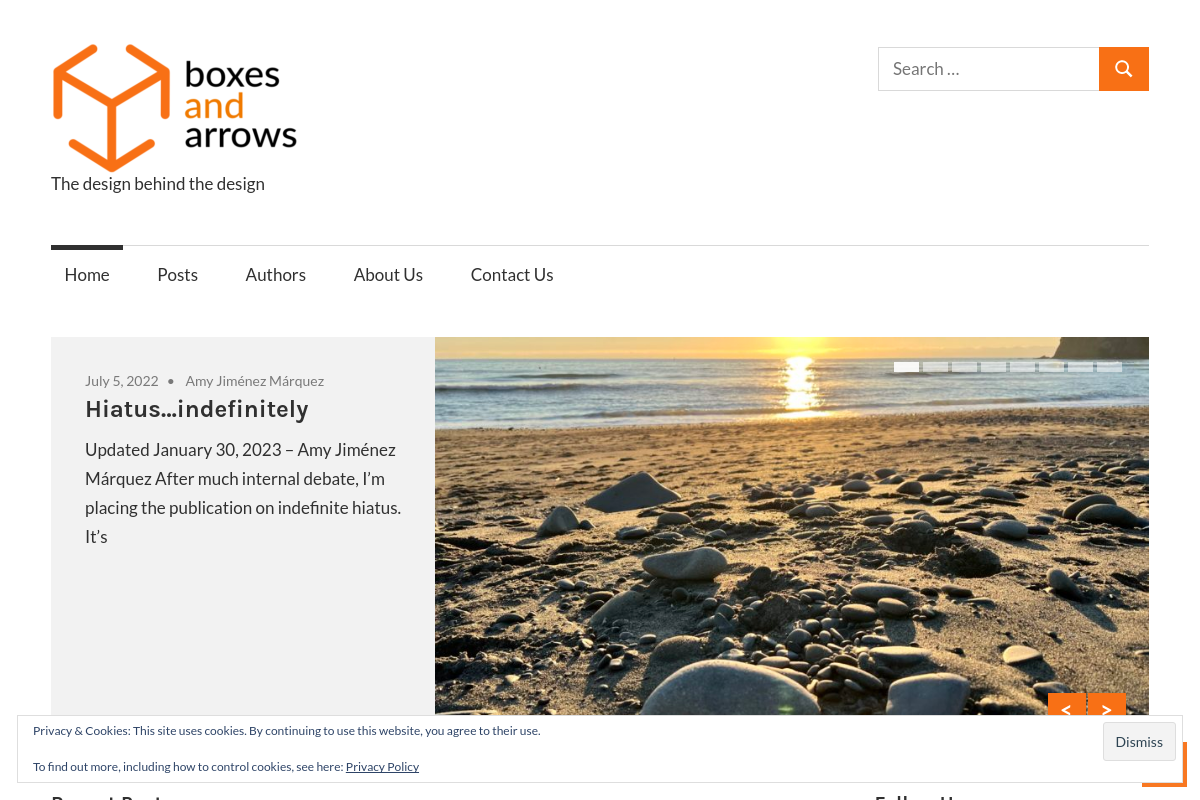
The overview
What Boxes and Arrows is for
1Core Capabilities
- Long-form UX essays and case studies
- Topic browsing across IA, research, interactivity, and mobile UX
- Author index for reading by practitioner
- Site search plus month-by-month archive
- RSS feed for tracking new articles
Who it helps
Useful ways to use Boxes and Arrows
A practical path
Start from the UX problem, not the homepage
Use the site search or topic/archive navigation to find articles tied to the issue you are working through now, such as navigation design, content structure, interaction patterns, research synthesis, or design critique. Pick one article that matches your product stage instead of browsing broadly.
External signals
Reviews & reputation
Aggregated review score
The practical upside of Boxes and Arrows is steadier practice-to-output feedback loop; the tradeoff is disciplined handling of uneven depth across advanced topics.
Quick answers
Frequently asked questions
1Is Boxes and Arrows free to access?⌄
It appears to function more like an editorial resource than a paid UX application. Access terms can change, but most teams would assess it as reading material rather than something with seats, usage caps, or workspace billing. Check the site directly for current access terms.
2Who is Boxes and Arrows actually useful for?⌄
It is likely most useful for UX designers, information architects, content strategists, and design leads who want stronger reasoning before making structure, navigation, or interaction decisions. If your immediate task is building flows, testing prototypes, or shipping annotated screens, it will probably support the thinking around the work rather than produce the deliverable itself.
3Can it help during design critiques or research readouts?⌄
Yes, as reference material. Articles can give teams better language for discussing user flows, information architecture, interaction patterns, and tradeoffs when a critique starts drifting into preference-based debate. It does not appear to provide comments, approvals, or version history, so it fits beside review tools rather than replacing them.
4Does it include templates, UI kits, or handoff assets?⌄
You should expect essays and analysis first. If visuals are included, they are more likely to illustrate a point than serve as production-ready assets for component libraries, usability studies, or engineering handoff. Teams that need wireframes, reusable patterns, or exportable specs will probably need separate tools.
5What should teams check before reusing article content internally?⌄
Treat reuse carefully. Quoting short excerpts for critique sessions or internal learning may be acceptable in some cases, but broader redistribution, training reuse, or republishing usually depends on the site's copyright and attribution terms. Review those terms before copying material into playbooks, decks, or client work.
6When should I pick something else instead?⌄
Choose an alternative when the work is execution-heavy: prototyping, storing research evidence, managing annotations, tracking design decisions, or handing assets to engineering. Use Boxes and Arrows when you need perspective, UX vocabulary, or historical context around a design problem, not when the team needs files, states, and shipping artifacts.
Keep exploring