

What Is BoxRec Used For: Features, Reviews & Alternatives
Official record keeper for pro boxing.
Editorially updated Oct 25, 2025
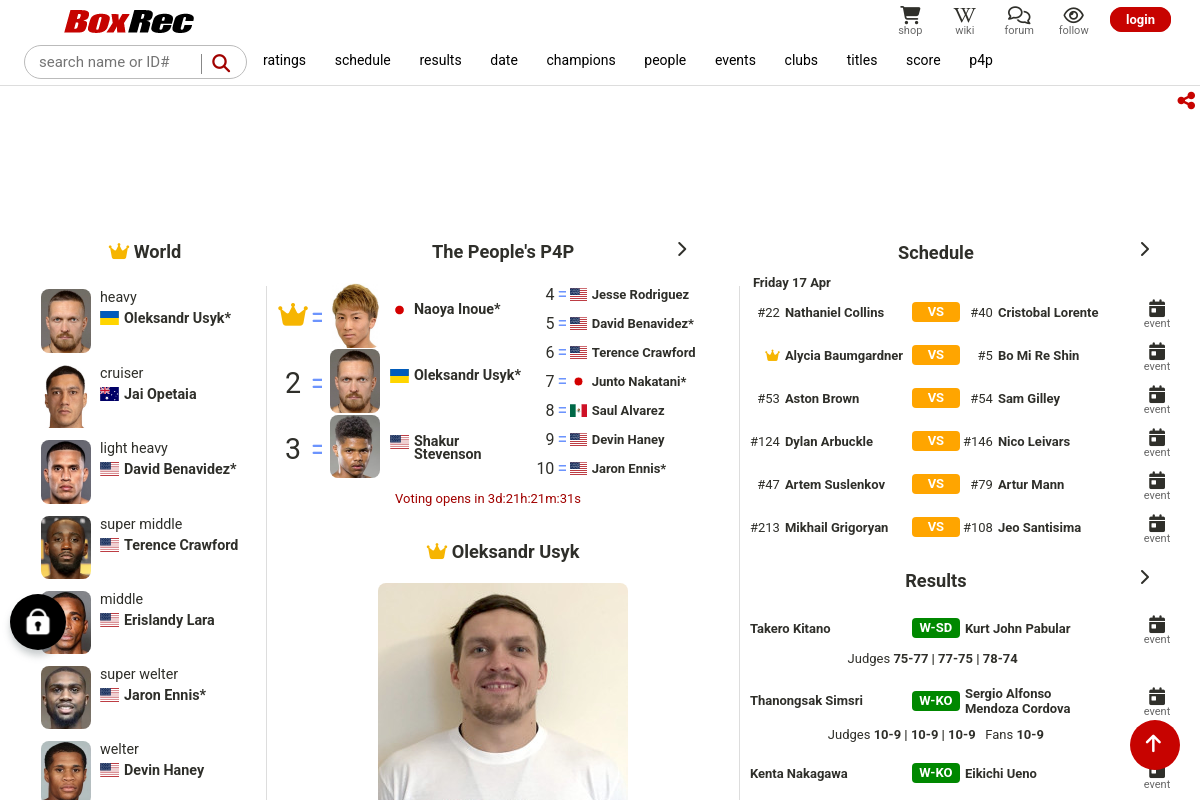
The overview
What BoxRec is for
1Core Capabilities
- Fighter, official, manager, promoter, and club lookup by name or ID#
- Bout records with venue, judges, referee, weights, rounds boxed, and result codes
- Division ratings with current, annual, all-time, and pound-for-pound views
- Schedule and results pages tied to event cards, champions, and title histories
- Scoring pages with judge totals, fan cards, and round-by-round tallies
Who it helps
Useful ways to use BoxRec
A practical path
Search the fighter or event you actually need
Start with the search bar and enter a boxer, promoter, venue, or event date. Open the exact fighter profile or show page rather than browsing broadly, since BoxRec is most useful when you already need to verify a record, a past result, or an upcoming matchup.
External signals
Reviews & reputation
Aggregated review score
BoxRec can deliver reliable outcomes for workflow completion, especially when rollout begins with a pilot focused on official.
Quick answers
Frequently asked questions
1Do I need to pay to look up a fighter's record or past opponents?⌄
Basic record lookup appears to be available on the public site, so many matchmakers, media staff, and fans can use it without a formal buying process. If you need editing rights, account-level access, or any staff-side functions, the requirements may differ and are worth confirming directly with BoxRec.
2Who is BoxRec actually for in a boxing operation?⌄
It fits people who need to verify pro bout history before making a match, writing a preview, checking a card, or reviewing a boxer's progression through weight classes. If your main job is amateur tracking, gym management, ticketing, or medical compliance across commissions, it is likely only one reference point rather than the whole stack.
3Can a manager, promoter, or boxer change a record directly?⌄
You should not assume open self-editing. Record changes, result corrections, or missing bout updates may depend on recognized editors, supporting evidence, or manual review, which matters if you are trying to fix an opponent line or result on a deadline.
4How fast do results usually show up after a card ends?⌄
That can depend on the event and who is maintaining the record. Big televised cards may be updated quickly, while smaller regional shows can take longer if reporting is delayed or a result needs confirmation, so it is safer to treat same-night accuracy as variable rather than guaranteed.
5Does BoxRec cover everything needed to approve or evaluate a bout?⌄
No. It is useful for checking pro records, opponent history, stoppage patterns, and bout chronology, but it does not replace commission paperwork, medical suspensions, contracts, video study, or sanctioning-body rules. Most serious boxing work still needs those sources beside the record page.
6What should I use alongside BoxRec if I am comparing opponents or preparing a matchup?⌄
Use it with commission releases, sanctioning-body information, recent fight footage, and local event reports. BoxRec is strong when you need a record trail, but it is less suited to judging style matchups, current form, or behind-the-scenes availability on its own.
Keep exploring