

What Is Boys & Girls Clubs of America Used For: Features, Reviews & Alternatives
Provides after-school programs for youth.
Editorially updated Oct 25, 2025
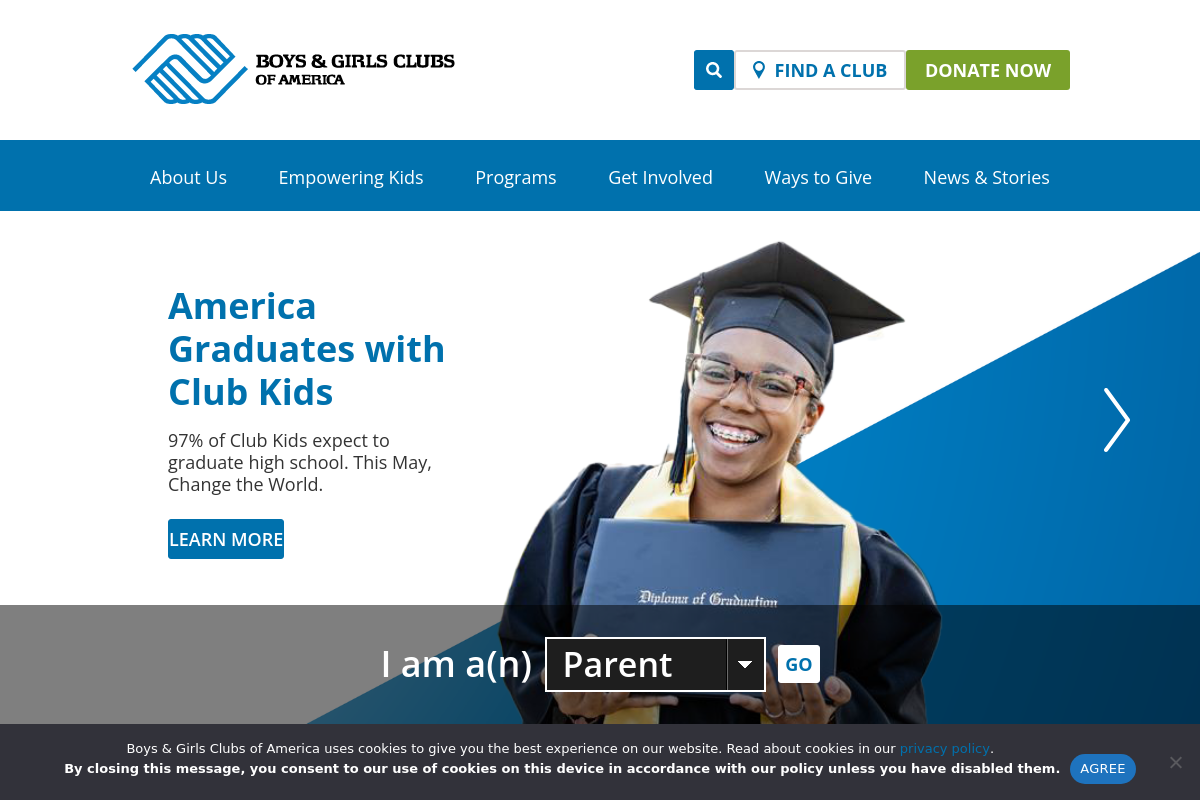
The overview
What Boys & Girls Clubs of America is for
1Core Capabilities
- Club locator with city or ZIP-based search
- Program pages grouped by youth interests, school support, leadership, and recreation
- Membership and local contact paths that point families to the nearest club for enrollment details
- Volunteer, donation, and partner sign-up forms for community involvement
Who it helps
Useful ways to use Boys & Girls Clubs of America
A practical path
Find the local club that actually serves your area
From the homepage, open the club locator and search by ZIP code or city. Use the results to narrow to the club that matches your school area or driving radius, since membership rules, hours, and availability are handled locally rather than nationally.
External signals
Reviews & reputation
Aggregated review score
This pass shows Boys & Girls Clubs of America fitting strongest workflows where high-volume discussion participation quality is measurable and abuse control and response speed controls are documented.
Quick answers
Frequently asked questions
1How can I tell whether Boys & Girls Clubs of America is a realistic option for my child, not just a general youth resource?⌄
Start with the local club, not the national brand name. A careful fit check usually comes down to age range, school-year versus summer availability, pickup or transportation rules, hours that match your household schedule, and whether the club serves your ZIP code or school area. If the site does not make those boundaries clear, contact the local chapter before filling out forms.
2What does participation usually cost?⌄
Costs may differ a lot by local club. Some locations may charge a basic membership fee, while others could add separate charges for sports, trips, specialty programs, or extended-day coverage. Before committing, look for a fee schedule, refund terms, and whether financial assistance or scholarships are explained in plain language.
3What paperwork or permissions should a parent expect before a child can attend?⌄
Enrollment often involves more than a simple sign-up. Many youth programs ask for emergency contacts, authorized pickup details, medical or allergy information, school information, behavior expectations, and consent for trips, photos, or digital communication. If those requirements are not listed clearly online, ask for the full enrollment packet before planning around the program.
4Does the website let me complete enrollment directly, or is it mainly a starting point?⌄
That can vary. The national site may function more as an information and club-finder hub, while actual registration could happen through a local chapter page, a separate form system, or offline by phone or in person. If you need immediate placement, confirm where the real application step happens and whether spots are limited by season or site capacity.
5What should I review about privacy before sharing a child's information?⌄
For a family service site, the main question is whether it explains how child and parent information is collected, stored, and shared between the national organization and local clubs. Look for clear privacy terms, contact methods, and any mention of third-party forms or payment tools. If the website routes you to a local chapter or outside portal, review that page's privacy and contact details separately.
6What if there is no nearby club or the local program does not match our needs?⌄
If location, schedule, age range, or transportation rules are a poor match, treat the site as one option within a broader community support search. In that case, compare it with school-based after-school care, municipal youth centers, parks and recreation programs, YMCA branches, and nonprofit neighborhood programs. The deciding factor is usually not the national name but whether the local provider makes eligibility and next steps easy to verify.
Keep exploring