

What Is Bureau of Labor Statistics (BLS) Used For: Features, Reviews & Alternatives
Official US government occupation wage data.
Editorially updated Oct 25, 2025
The overview
What Bureau of Labor Statistics (BLS) is for
1Core Capabilities
- Occupation wage tables by job title and SOC code
- National, state, metro, and nonmetro pay breakdowns
- Mean, median, hourly, annual, and percentile wage estimates
- Industry wage cuts for the same occupation
- Spreadsheet-style data downloads for offline analysis
Who it helps
Useful ways to use Bureau of Labor Statistics (BLS)
A practical path
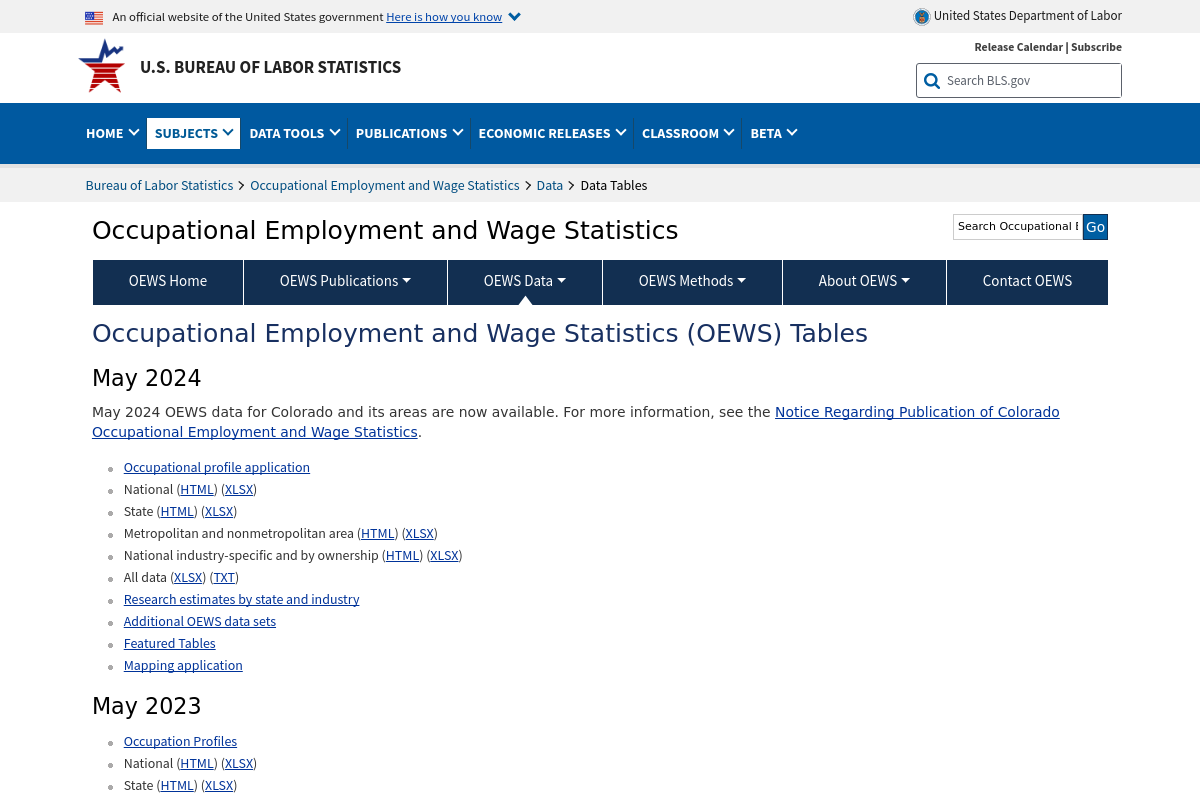
Search the exact occupation
Start with the BLS site search or the Occupational Outlook Handbook and enter the job title you are pricing. Pick the closest occupation profile, since BLS wage data is organized around standard occupation groups rather than employer-specific titles.
External signals
Reviews & reputation
Aggregated review score
The practical upside of Bureau of Labor Statistics (BLS) is steadier repeatable team usage; the tradeoff is disciplined handling of maintenance overhead and process drift.
Quick answers
Frequently asked questions
1Do I need to pay or create an account to check occupation wages on BLS?⌄
Usually no. BLS wage tables are generally published for public access, so most salary lookups start without a subscription or login. If your team needs internal pay bands, saved benchmarks, or recruiter-style dashboards, BLS is better treated as a source dataset than a finished compensation tool.
2When is BLS a good salary source, and when does it fall short?⌄
It fits when someone needs a grounded US wage reference for a job family, metro area, or industry context and wants a defensible public benchmark. It falls short if the job is highly new, title inflation is heavy, or the decision depends on equity, bonus mix, remote premiums, or company-stage compensation that government occupation data may not capture cleanly.
3Can I use BLS wage data for compensation planning or client-facing reports?⌄
Often yes for reference and benchmarking, but the safe answer depends on how you plan to reuse the material. Public wage figures are commonly cited in research, HR, and career content, yet teams should still check any current BLS terms, attribution expectations, and update cadence before packaging the numbers into paid reports, salary calculators, or commercial deliverables.
4Does BLS show what one employer is paying right now?⌄
No, not in the way a live hiring marketplace would. BLS is typically stronger for broad occupation-level wage estimates than for employer-specific offers, current negotiation ranges, or fast-moving local shortages. If the real question is 'What should this candidate ask for this month at this exact company?', you may need job-posting data, recruiter inputs, or compensation software alongside BLS.
5What should I expect on privacy and data handling?⌄
For basic reading, BLS is usually a low-risk source because you are accessing public government data rather than handing over employee payroll files. Still, privacy expectations can change depending on whether you only browse tables, download files, or use any optional tools or contact forms, so teams with strict compliance requirements should review the current BLS privacy and site policies directly.
Keep exploring