

What Is Cambridge Core: Education Used For: Features, Reviews & Alternatives
Cambridge University Press education content.
Editorially updated Oct 5, 2025
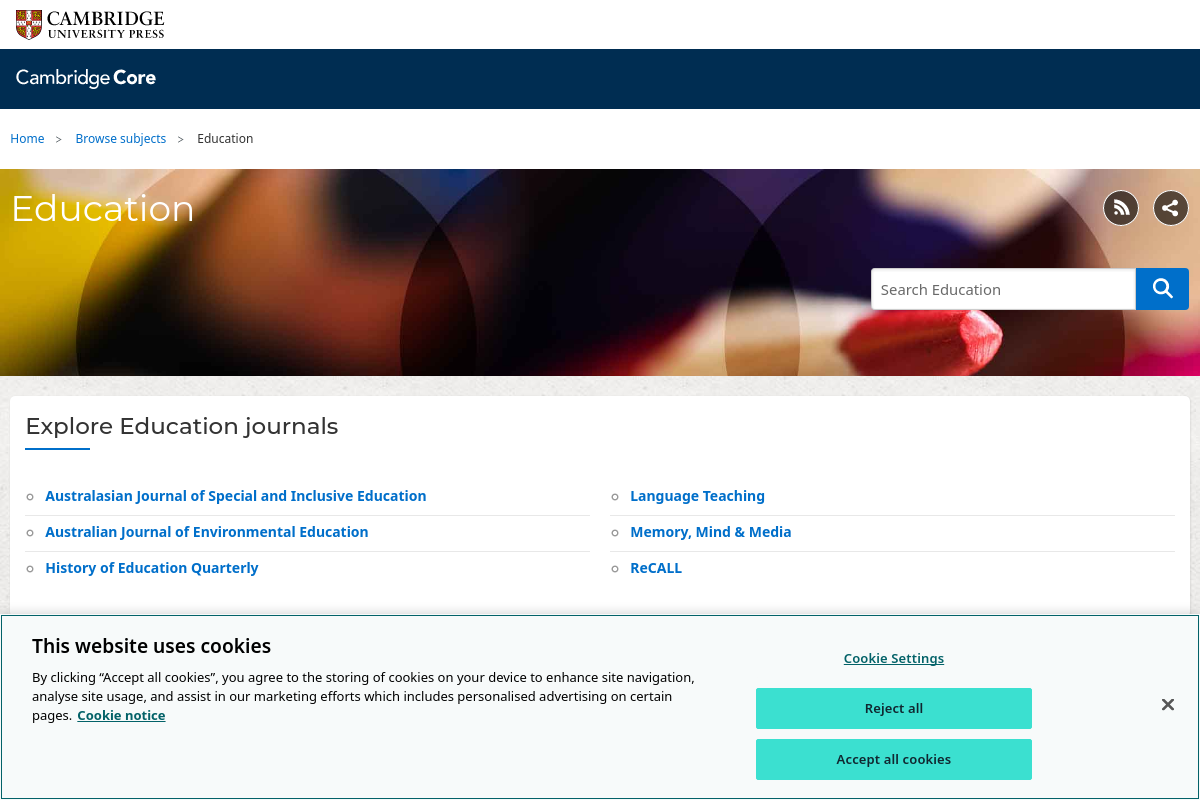
The overview
What Cambridge Core: Education is for
1Core Capabilities
- Education journals, books, and reference works in one searchable subject collection
- Article and chapter pages with abstracts, references, and PDF or HTML reading views
- Filters for content type, publication date, author, and access status
- Citation export tools for literature reviews, course reading lists, and repeat study
Who it helps
Useful ways to use Cambridge Core: Education
A practical path
Search the Education catalog by topic
Start in the Education section of Cambridge Core and search for the teaching problem or research topic you need, then narrow the results with filters such as content type, subject area, publication date, and access so you are comparing the right books, journal articles, and chapters.
External signals
Reviews & reputation
Aggregated review score
The practical upside of Cambridge Core: Education is steadier progress tracking and revision cadence; the tradeoff is disciplined handling of drop-off and uneven topic depth.
Quick answers
Frequently asked questions
1Is Cambridge Core: Education a good fit for teacher training, curriculum studies, or education policy research?⌄
Usually yes if the main job is finding scholarly books, chapters, and journal articles in education. It tends to fit university coursework, postgraduate research, teacher education, literacy studies, assessment research, and policy review better than day-to-day K-12 classroom drill work. A useful fit question is: do you need citable academic sources for repeat reading and reference, or do you need ready-made lesson delivery tools?
2Do you need a subscription to use Cambridge Core: Education?⌄
Often yes. Access may depend on whether your university, school, or library licenses the relevant journals and books. Some content can be open access, while other material may require institutional login, personal purchase, or chapter-level access. If budget matters, check whether the exact titles you need are included through your library before relying on it for a course list.
3Can instructors share PDFs or upload Cambridge Core readings directly into an LMS?⌄
That depends on the license and on the specific material. In many cases, linking students to the official record or library proxy link is safer than redistributing downloaded files. If a department wants to post chapters inside Moodle, Canvas, or Blackboard, it is worth confirming what the institution's library license and copyright guidance allow.
4Will it work well for students on phones, tablets, and citation-heavy assignments?⌄
As a web-based academic resource, it should be usable from standard browsers across desktop and mobile devices. Citation export, PDF availability, and reading options may vary by title, format, or subscription rights. For essay-based courses, it is more relevant as a reading and reference source than as an interactive study app.
5Can Cambridge Core: Education replace a curriculum platform or a question bank?⌄
Usually no. It is better understood as an educational database for academic reading and source discovery, not as a teaching platform with auto-graded quizzes, pacing tools, classroom management, or exam practice workflows. A useful usage-boundary question is: are you collecting research literature, or are you trying to run instruction and assessment from one system?
Keep exploring