

What Is CBP.gov Used For: Features, Reviews & Alternatives
US Customs and Border Protection.
Editorially updated Oct 25, 2025
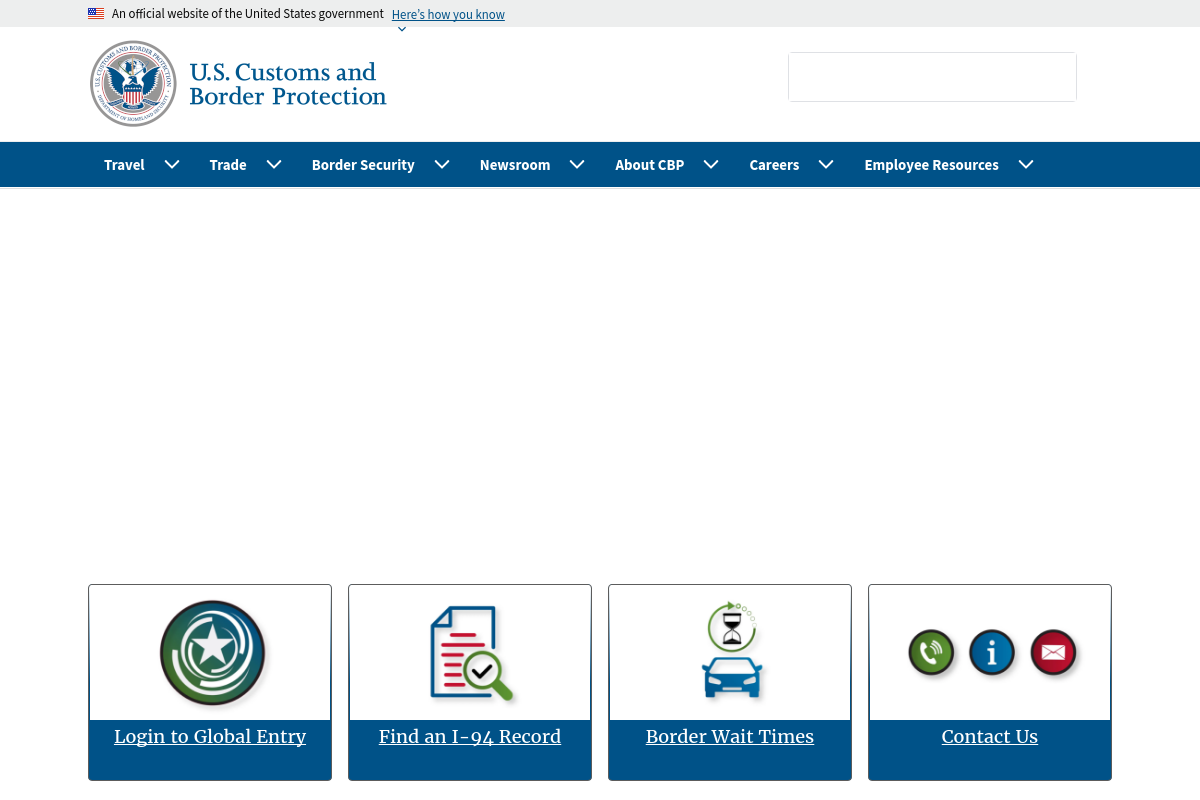
The overview
What CBP.gov is for
1Core Capabilities
- I-94 arrival and departure record lookup
- Trusted Traveler enrollment, renewal, and interview guidance
- Port of entry directory with land border wait times
- Entry document requirements by traveler status and trip purpose
- Customs declaration rules for restricted, prohibited, and taxable items
Who it helps
Useful ways to use CBP.gov
A practical path
Confirm CBP Handles Your Issue
Start in Travel and open International Visitors to sort out whether your question is about border admission, ESTA, or an I-94 record. This is the quickest way to tell if CBP is the right agency for your case, instead of a visa issuance or an immigration benefit handled elsewhere.
External signals
Reviews & reputation
Aggregated review score
CBP.gov can deliver reliable outcomes for workflow completion, especially when rollout begins with a pilot focused on customs.
Quick answers
Frequently asked questions
1Should I start with CBP.gov or another agency if I need immigration help?⌄
Use CBP.gov first when your question is about admission to the United States, an I-94, travel entry history, a port of entry, or a Trusted Traveler step. If you need a visa decision, a green card filing, naturalization, or most post-entry immigration benefits, another agency is usually the real starting point. For arrival and departure records, begin here: https://www.cbp.gov/I94
2Will I need to pay to use CBP.gov?⌄
General guidance pages and many self-service lookups appear to be free. Fees can apply once you move into a specific government program, especially Trusted Traveler enrollment, and some pre-arrival travel processes may carry their own charges. Check the exact page tied to your case before you submit payment. One example is Global Entry: https://www.cbp.gov/travel/trusted-traveler-programs/global-entry/
3Do I need a special account or prior approval before I can use the main services?⌄
For public information, usually no account is required. For gated functions, the answer depends on the service: Trusted Traveler tasks typically use a separate program account, and some CBP tools only make sense if you already have an eligible travel document or a recent admission record. If you do not yet know your class of admission or whether you are dealing with CBP versus USCIS or the State Department, sort that out first. Trusted Traveler overview: https://www.cbp.gov/travel/trusted-traveler-programs
4Can CBP.gov approve a visa, green card, or citizenship case?⌄
Usually no. CBP's role is closer to inspection, admissibility at the border, arrival and departure records, ports of entry, and traveler programs. It can clarify what happened at entry or what record CBP holds, but it is not generally the site that adjudicates a visa application, immigrant petition, or naturalization case. Travel and visitor guidance is here: https://www.cbp.gov/travel
5How much personal or biometric information should I expect to provide?⌄
Reading public guidance may not require personal information. Transactional services can require passport details, biographic information, travel dates, and other identifiers that need to match your record closely. Some border-processing programs may also involve biometric identity checks under separate privacy notices. Review the general site policy and any service-specific notice before using a sensitive feature: https://www.cbp.gov/site-policy-notices/privacy-policy and https://www.cbp.gov/travel/biometrics/biometric-privacy-policy
6What should I do if my I-94 or traveler record looks wrong, or I cannot tell which step applies to me?⌄
CBP generally points users to the CBP Info Center first, and some issues may then need a local port of entry, an enrollment center, or a more specific redress path. That is often the right next step for an incorrect arrival record, a confusing admission entry, or a Trusted Traveler question that the public pages do not resolve. Start with https://www.help.cbp.gov/s/questions?language=en_US&lingual=en_US and the contact hub at https://www.cbp.gov/about/contact
Keep exploring