
What Is ChemCollective Used For: Features, Reviews & Alternatives
Online resources for teaching chemistry.
Editorially updated Oct 5, 2025
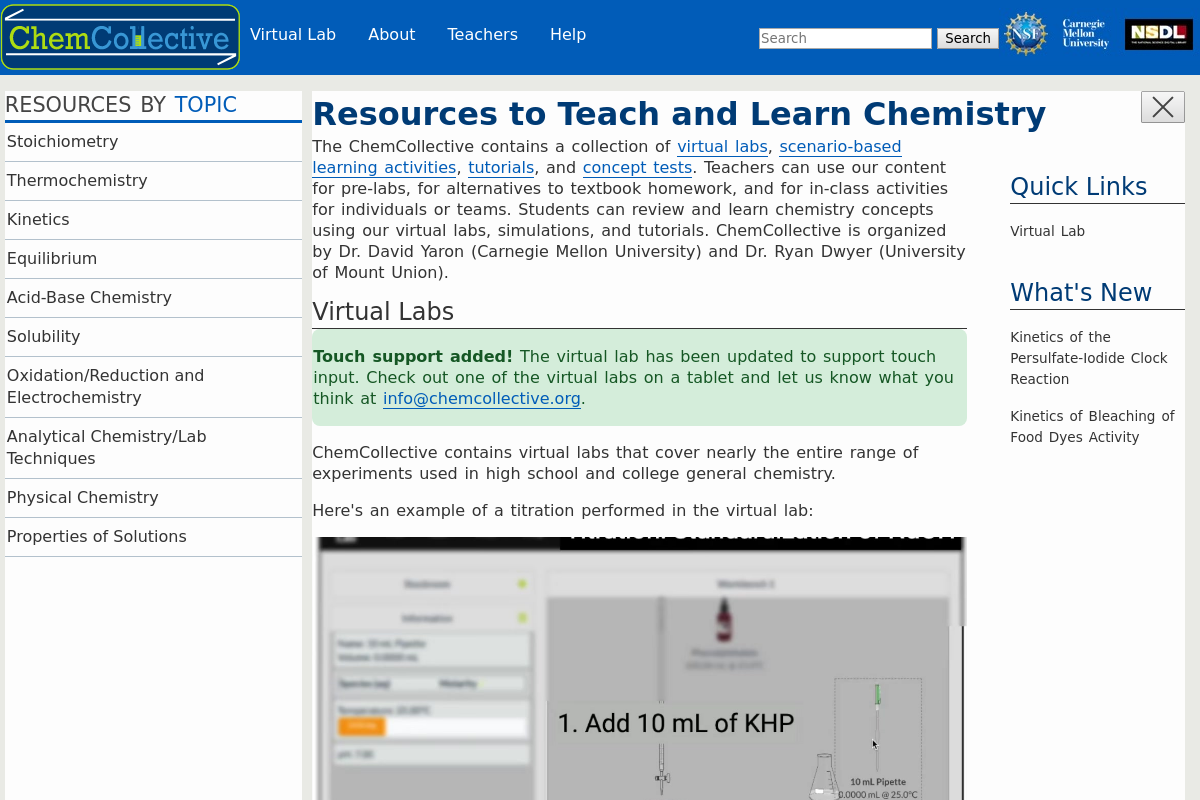
The overview
What ChemCollective is for
1Core Capabilities
- Browser-based virtual chemistry lab work for exploring experiment setup, variables, and outcomes without consuming physical lab time
- Topic-focused study materials that align with foundational chemistry units often needed before or alongside engineering coursework
- Instructor-usable activities for recitation, pre-lab assignment, homework reinforcement, or targeted review sessions
- Resources that can support repeat study, letting students revisit a narrow concept area instead of restarting from an entire chapter
Who it helps
Useful ways to use ChemCollective
A practical path
Identify one recurring chemistry bottleneck
Start with a unit that repeatedly slows engineering-track students, such as stoichiometry, solution concentration, or equilibrium calculations, and select only the materials tied to that gap.
External signals
Reviews & reputation
Aggregated review score
The practical upside of ChemCollective is steadier progress tracking and revision cadence; the tradeoff is disciplined handling of drop-off and uneven topic depth.
Quick answers
Frequently asked questions
1Is ChemCollective a full replacement for a chemistry textbook?⌄
Usually it makes more sense as a supplemental teaching resource. It appears most useful when paired with a course syllabus, instructor notes, and graded problem work.
2How well does it fit engineering education?⌄
The better fit is early-stage engineering preparation where chemistry is a prerequisite skill set. It is less likely to cover upper-division engineering content the way a dedicated chemical engineering resource would.
3Can students use it for repeat study?⌄
Yes, that seems to be one of its more practical uses. Reusable topic activities and simulations are easier to revisit than one-off lecture examples.
4Is it useful when lab access is limited?⌄
Potentially yes, especially if virtual lab materials are part of the current site. It can help with conceptual rehearsal, though it should not be treated as a substitute for hands-on technique training.
5Does it support teaching research or course redesign?⌄
Potentially in a modest way. Reusable activities can help instructors compare how different sections respond to the same topic framing, but the research value depends on how consistently the materials are integrated.
Keep exploring