

What Is ChemSpider Used For: Features, Reviews & Alternatives
Free chemical structure database (RSC).
Editorially updated Oct 25, 2025
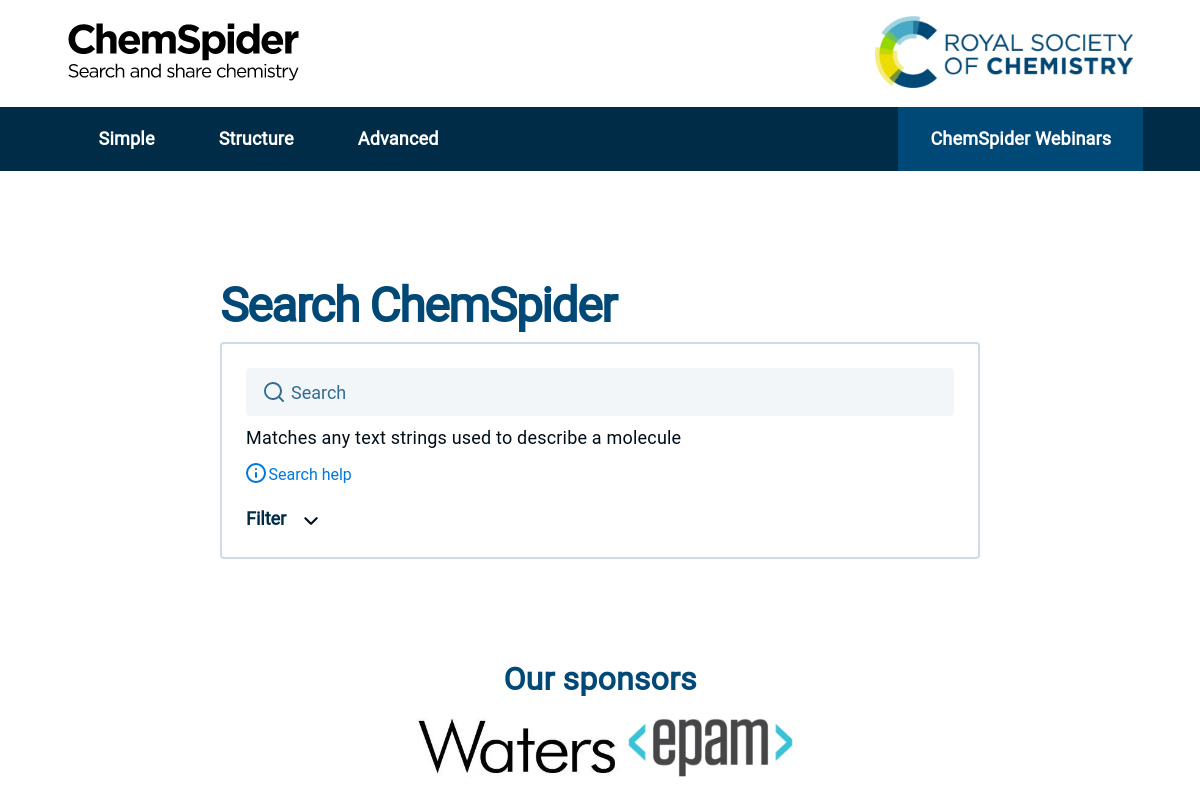
The overview
What ChemSpider is for
1Core Capabilities
- Search compounds by chemical name, molecular formula, and structure-oriented identifiers to resolve ambiguous naming quickly
- Use structure and substructure lookup to check whether a scaffold, substituent pattern, or candidate analogue is already represented
- Review compound pages that bring together synonyms, basic identifiers, and linked reference sources in one place
- Cross-check how a compound is represented across different naming conventions before citing it in notes, reports, or procurement requests
Who it helps
Useful ways to use ChemSpider
A practical path
Start from the identifier you trust most
Enter a precise chemical name, formula, or structure-derived identifier when available. This reduces confusion from informal synonyms and trade names.
External signals
Reviews & reputation
Aggregated review score
ChemSpider can deliver reliable outcomes for workflow completion, especially when rollout begins with a pilot focused on chemical.
Quick answers
Frequently asked questions
1Is ChemSpider a chemistry learning platform?⌄
Not in the usual courseware sense. It is more useful as a compound reference and identity-checking resource than as a guided teaching system with lessons or problem sets.
2Who gets the most value from it?⌄
Upper-level students, research assistants, analytical staff, and chemists who need to verify compound identity, naming, or structural representation will usually get more value than beginners looking for step-by-step instruction.
3Can it replace a primary literature search?⌄
Usually no. It can help you identify the right compound and gather linked references, but careful literature review still needs source-level checking.
4Is it suitable for repeat study?⌄
Yes, if your study pattern involves repeated comparison of structures, formulas, and synonyms. It is less suitable if you need sequenced exercises or progressive topic coverage.
5What should a careful evaluator check before relying on it heavily?⌄
Check whether your work depends mainly on compound lookup and nomenclature resolution, or whether you also need spectral interpretation training, reaction instruction, or curated teaching paths that ChemSpider does not center on.
Keep exploring