

What Is Cognite Used For: Features, Reviews & Alternatives
Industrial DataOps software (Cognite Data Fusion) for heavy-asset industries.
Editorially updated Oct 5, 2025
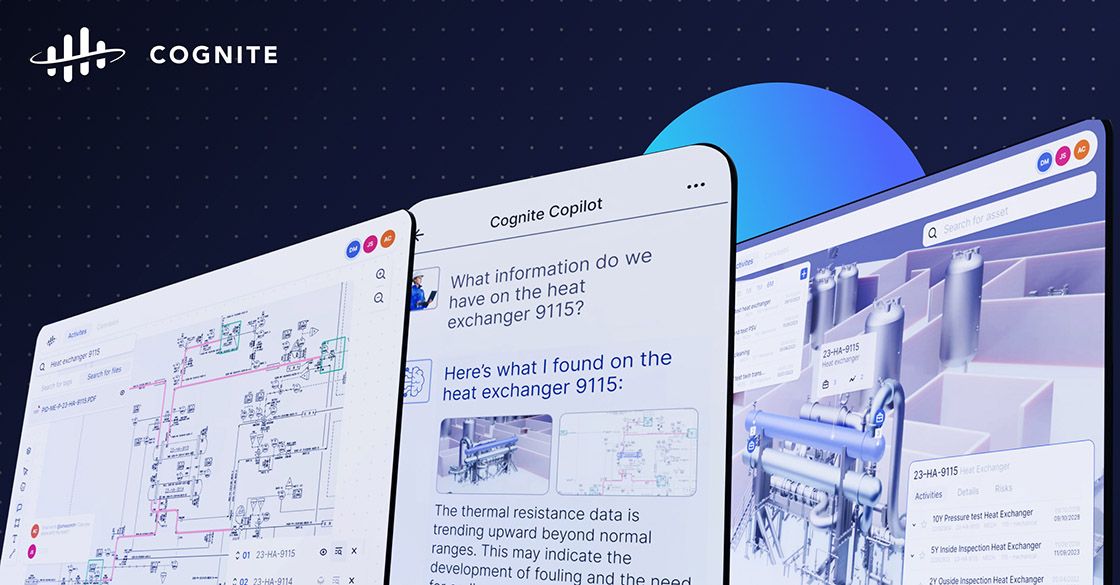
The overview
What Cognite is for
1Core Capabilities
- Industrial data contextualization across historians, ERP, CMMS, MES, and engineering document repositories
- Asset-centric modeling that links time series, events, work orders, files, and equipment records into a shared operational graph
- Search and investigation tooling for tracing faults, operating deviations, and maintenance history across related assets
- Document understanding tied to plant context, including manuals, drawings, and technical records connected to equipment
- APIs and application-building surfaces for industrial dashboards, analytics, and AI assistants grounded in plant data
Who it helps
Useful ways to use Cognite
A practical path
Pick a high-friction asset area
Start with a compressor train, pump network, or process unit where teams already lose time reconciling historian tags, CMMS records, and engineering files.
External signals
Reviews & reputation
Aggregated review score
Cognite can deliver reliable outcomes for workflow completion, especially when rollout begins with a pilot focused on industrial.
Quick answers
Frequently asked questions
1Which source systems matter most in a Cognite evaluation?⌄
Most evaluations focus on historians, CMMS, ERP, SCADA or MES, and engineering document repositories. The key question is less whether data can be ingested at all and more how cleanly those sources can be aligned to the site's asset model.
2How much modeling work should a buyer expect?⌄
Usually enough to plan for explicitly. Heavy-asset deployments often require deliberate work on tag mapping, equipment hierarchy, naming inconsistencies, and document linkage before higher-level AI use cases feel dependable.
3Is Cognite mainly for data teams, or can plant engineers use it directly?⌄
It tends to serve both, but value usually appears only when the data layer and the operational view meet in the same place. Data engineers may own ingestion and context building, while reliability, maintenance, or operations users pressure-test whether the resulting views match how the plant actually works.
4Can it support AI copilots or search-based assistance?⌄
Potentially, yes, but only if the underlying context is mature. Search or copilot features are far more useful when time series, events, documents, and asset relationships have already been linked with enough precision to reduce ambiguity.
5What should be proven in a pilot before a larger rollout?⌄
A sensible pilot should show that recurring investigations can be repeated without hand-curated joins, such as tracing a pump trip from tags to alarms to work history to engineering documents. It should also expose where connector gaps, weak asset mappings, or unclear documentation may slow broader adoption.
Keep exploring