

What Is Mindsdb Used For: Features, Reviews & Alternatives
Brings machine learning into databases, facilitating AI agent creation.
Editorially updated Oct 5, 2025
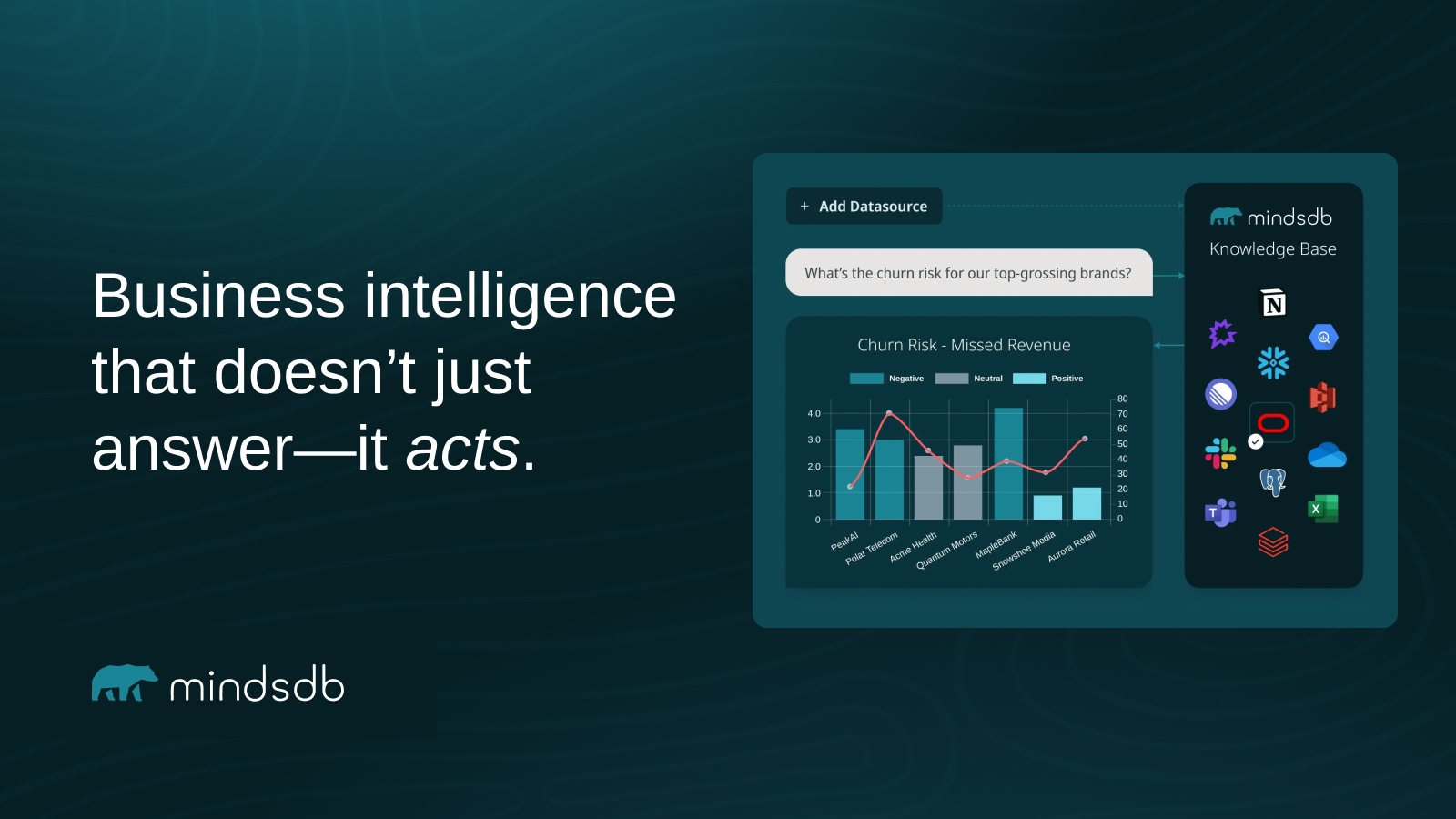
The overview
What Mindsdb is for
1Core Capabilitie
- Database connection panel
- ML model definition interface
- Predictive query execution
- AI Agent builder
- Model lifecycle management
2Specialized Workflow
- Data source integration wizard
- Pre-trained model catalog
- Real-time inference endpoint generation
- Agent prompt engineering console
- Observability dashboard
Who it helps
Useful ways to use Mindsdb
A practical path
Connect Data Source
Navigate to the 'Databases' section, select your database type (e.g., PostgreSQL, MySQL), and input connection credentials to link your data source
External signals
Reviews & reputation
Aggregated review score
Mindsdb simplifies the integration of machine learning into existing database infrastructure, enabling rapid development and deployment of AI agents. Its SQL-like interface for model creation is a significant advantage for data professionals, though advanced MLOps features might require deeper customization.
Quick answers
Frequently asked questions
1What types of databases can Mindsdb connect to?⌄
Mindsdb supports a wide range of SQL and NoSQL databases, including PostgreSQL, MySQL, MongoDB, Snowflake, BigQuery, and many others, through its native integrations and custom data connectors, allowing you to bring ML directly to your existing data infrastructure.
2Can I deploy the trained ML models or AI agents outside of Mindsdb's cloud environment?⌄
Yes, Mindsdb allows you to deploy models and agents as real-time inference endpoints (APIs) that can be consumed by any external application. For on-premise or private cloud deployments, the open-source version offers greater control over the hosting environment.
3How does Mindsdb handle data privacy and security when connecting to my databases?⌄
Mindsdb processes data within your environment or a secure cloud instance. It does not store your raw data; it only uses it for model training and inference. Connections are encrypted, and access controls are managed via your database's native permissions, ensuring data remains under your control.
4Is there a way to use custom machine learning models or frameworks with Mindsdb?⌄
While Mindsdb provides a rich set of built-in ML engines, it also supports bringing your own models (BYOM) by integrating custom Python models or leveraging frameworks like scikit-learn, TensorFlow, or PyTorch through custom handlers, extending its capabilities to specialized use cases.
5What are the typical costs associated with using Mindsdb, especially for production deployments?⌄
Mindsdb offers a free tier for basic usage and an open-source version for self-hosting. Paid plans are typically based on factors like the number of active models, inference requests, data volume processed, and support level, with enterprise options for dedicated resources and advanced features tailored to production needs.
Keep exploring