

What Is Practical Law Corporate (TR) Used For: Features, Reviews & Alternatives
Practical guidance for corporate lawyers.
Editorially updated Oct 25, 2025
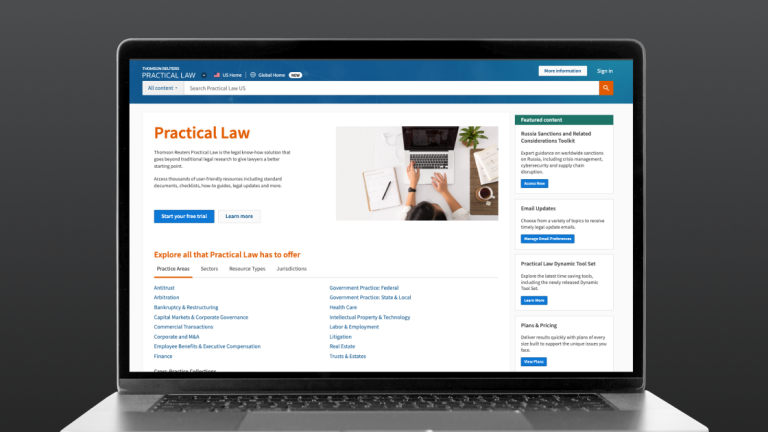
The overview
What Practical Law Corporate (TR) is for
1Core Capabilities
- Legislation and case-law-linked research organized by corporate law themes such as M&A, securities, governance, and finance
- Template library with board, corporate, financing, and transaction-ready language blocks that can be adapted per matter
- Jurisdiction-aware content tags for quickly separating local requirements from broadly reusable guidance
- Citation tracking and version visibility to support internal auditability and update discipline
- Issue-based search pathways for common stages like signing, closing, and post-close compliance checks
Who it helps
Useful ways to use Practical Law Corporate (TR)
A practical path
Confirm jurisdiction and matter fit
Open the relevant legal area and filter by country/region, listing the exact regimes your transaction will touch (e.g., filing state, securities venue, and any cross-border requirements).
External signals
Reviews & reputation
Aggregated review score
Practical Law Corporate (TR) can deliver reliable outcomes for self-service document completion, especially when rollout begins with a pilot focused on guidance.
Quick answers
Frequently asked questions
1What scope does Practical Law Corporate (TR) best support in corporate law practice?⌄
It is typically strongest for practical guidance across common corporate transaction work—especially M&A, corporate governance, financing structures, and compliance-related drafting support. The exact scope depends on your licensed modules and included jurisdictions, so verify both before rollout.
2Can my team safely rely on it for final legal decisions?⌄
Treat it as a reference and drafting accelerator, not a complete replacement for legal judgment. Use it for consistency and speed, then apply attorney-level review for business-impacting interpretations, risk posture, and client-specific advice.
3How should we assess information freshness?⌄
Check recency indicators, update notes, and whether references map to live legal authorities. If a topic has fast-moving regulation, test recent updates against another trusted source before including language in signing documentation.
4Is customization available for internal drafting standards?⌄
Most teams use it by pairing platform content with internal checklists, naming conventions, and review notes. Confirm whether your organization can store team annotations or workflow rules in a way your group can apply reliably.
5How useful is it for cross-border deals?⌄
Cross-border use is valuable only when jurisdictional coverage and conflict-of-law assumptions are explicitly identified. Verify in advance that each relevant authority is covered and that your deal team can still capture local counsel advice where risk is high.
Keep exploring