

What Is Relativity Used For: Features, Reviews & Alternatives
e-Discovery software platform.
Editorially updated Oct 25, 2025
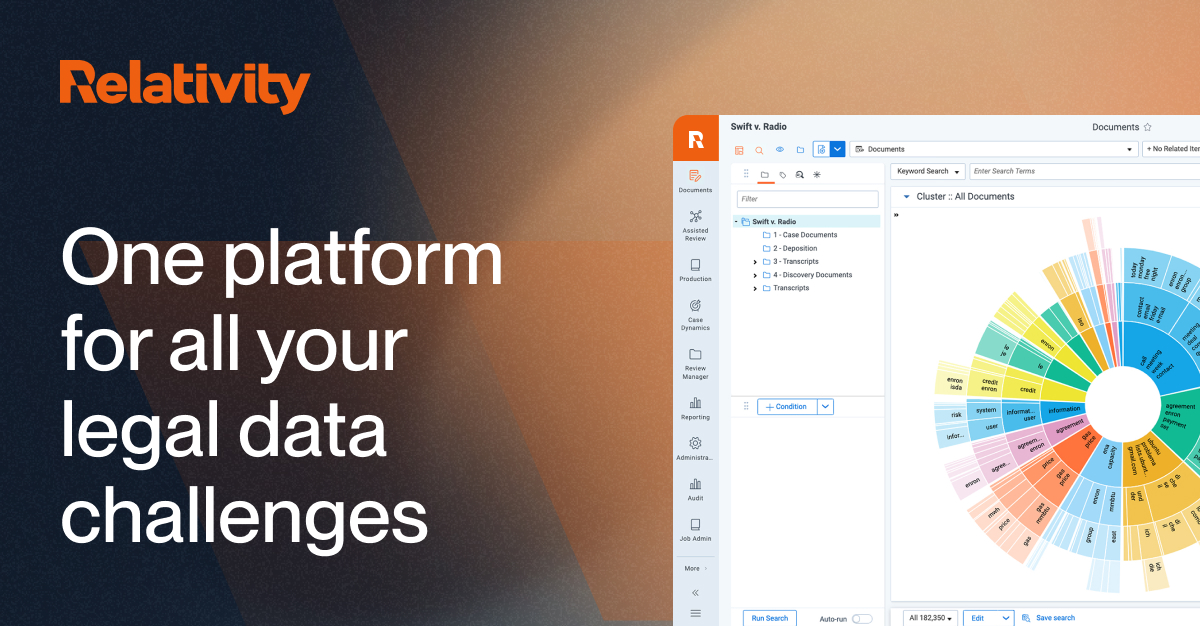
The overview
What Relativity is for
1Core Capabilities
- Document Review Interface
- Analytics & Conceptual Search Panel
- Processing & Ingestion Module
- Production Set Configuration
- Privilege Log Builder
- Case Dashboard
Who it helps
Useful ways to use Relativity
A practical path
Access Case Workspace
Navigate to the specific case workspace URL and log in with your assigned credentials to access active matters and review project
External signals
Reviews & reputation
Aggregated review score
Relativity is widely regarded as a leading e-Discovery platform, praised for its comprehensive feature set, scalability for large datasets, and robust document review capabilities. Users often highlight its powerful analytics and customization options, though some note a learning curve for new users and the complexity of certain advanced functionalities.
Quick answers
Frequently asked questions
1What data types does Relativity support for ingestion?⌄
Relativity supports a wide range of electronically stored information (ESI), including email, office documents, chat logs, and structured data, with specific processing capabilities for various file formats commonly encountered in legal matters.
2Is Relativity available as a cloud-hosted solution?⌄
Yes, Relativity offers cloud-hosted deployments, notably RelativityOne, which provides browser-based access without requiring on-premises infrastructure, allowing for scalable and secure e-Discovery operations.
3How does Relativity handle data security and compliance for legal data?⌄
The platform incorporates robust security measures, including encryption for data at rest and in transit, granular access controls, and comprehensive audit trails, designed to meet stringent legal industry compliance standards and data privacy regulations.
4Can I integrate Relativity with other legal technology tools?⌄
Relativity provides APIs and various integration points to connect with other legal applications, such as case management systems or specialized analytics tools. Specific integrations may require custom development or leveraging third-party connectors.
Keep exploring