

What Is SimpleMind Used For: Features, Reviews & Alternatives
Cross-platform mind mapping tool.
Editorially updated Oct 25, 2025
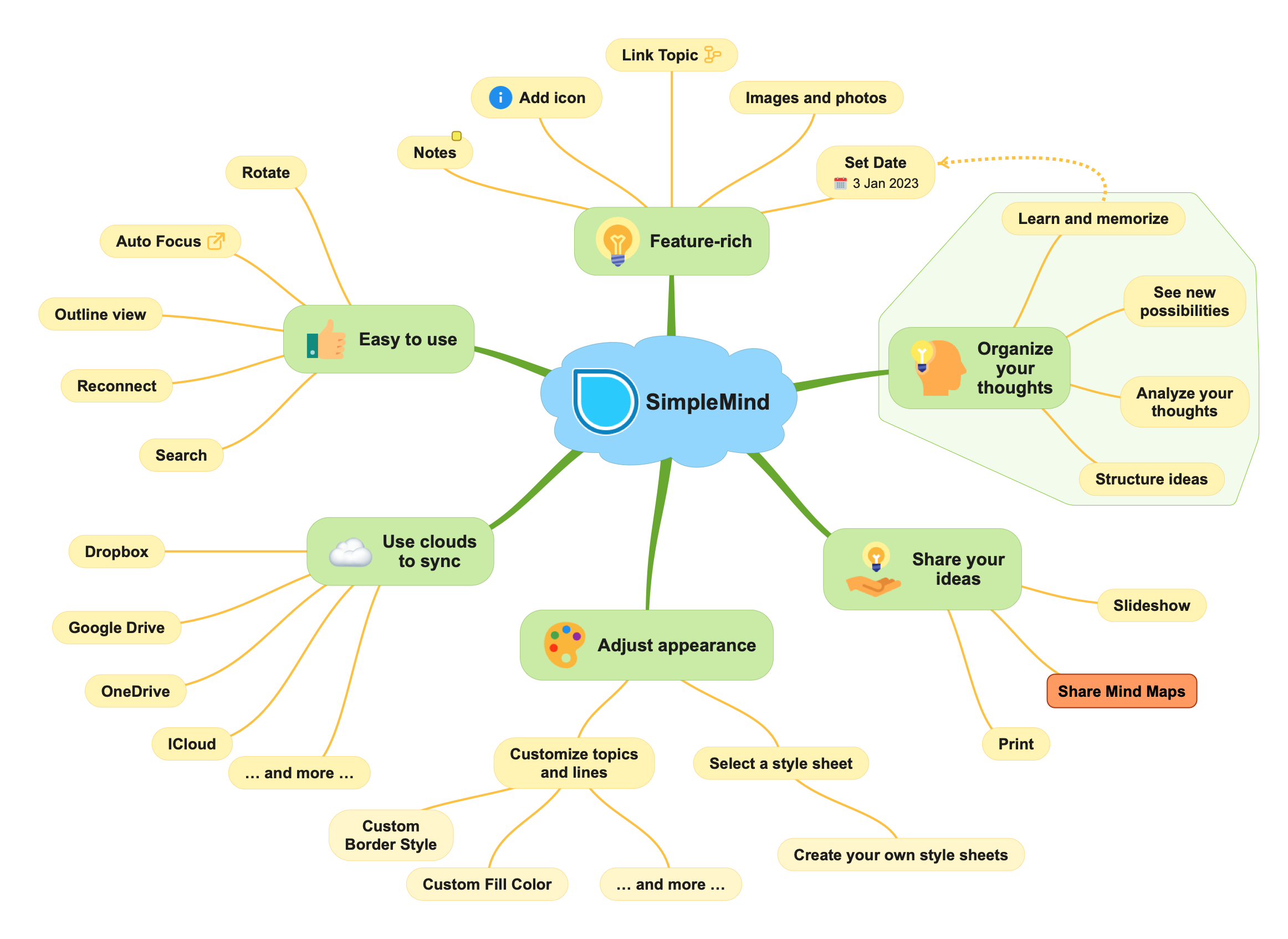
The overview
What SimpleMind is for
1Core Capabilities
- Branch-heavy structure for causal analysis, project planning, and idea clustering in one tree-like visual with clear parent-child traceability
- Node-level annotations (notes, tags, and links) to keep rationale and evidence close to each branch instead of scattered across chat logs or docs
- Focused keyboard and rapid-edit controls for adding topics, promoting/demoting branches, and reorganizing quickly during fast-paced sessions
- Cross-platform continuity so one map can be opened and continued across operating environments without rebuilding context
- Map snapshots and revision history to review what changed between planning rounds and recover prior logic when an update went wrong
Who it helps
Useful ways to use SimpleMind
A practical path
Start from the trigger moment
Open a fresh map with the source of work as the central topic (incident title, campaign, or program objective) so the map starts with the exact operating question.
External signals
Reviews & reputation
Aggregated review score
The practical upside of SimpleMind is steadier repeatable team usage; the tradeoff is disciplined handling of maintenance overhead and process drift.
Quick answers
Frequently asked questions
1Is it reliable enough for recurring operational maps, or does it degrade with large structures?⌄
That depends on your map size and device path. Test with your realistic node count in a pilot map before commitment, especially if your team repeatedly revisits the same map over multiple weeks.
2How quickly can a new team member become productive?⌄
Most teams evaluate first-use clarity by creating one real scenario map, not a demo template. If the first import or first map takes longer than 15–20 minutes to reach useful structure, onboarding friction may outweigh the value.
3What should I verify about platform support?⌄
SimpleMind is positioned as cross-platform, but you should confirm exact desktop/mobile versions, sync behavior, and any feature limits per platform before standardizing a workflow.
4Can it integrate with the document flow I already use?⌄
Check for stable export/import options and whether exported files preserve hierarchy, notes, and links in a form your team can reuse. If not, map value often drops once teams need downstream reporting.
5Is there hidden overhead in long-term maintenance?⌄
Look for signs of map rot by testing edits over multiple sessions: branch naming consistency, duplicate control, and revision recovery speed. If cleanup takes longer than updates, consider stricter conventions or a different structure before expanding usage.
Keep exploring