

What Is Smodin AI Detector Used For: Features, Reviews & Alternatives
AI writing detection tool supporting multiple languages from Smodin.
Editorially updated Oct 5, 2025
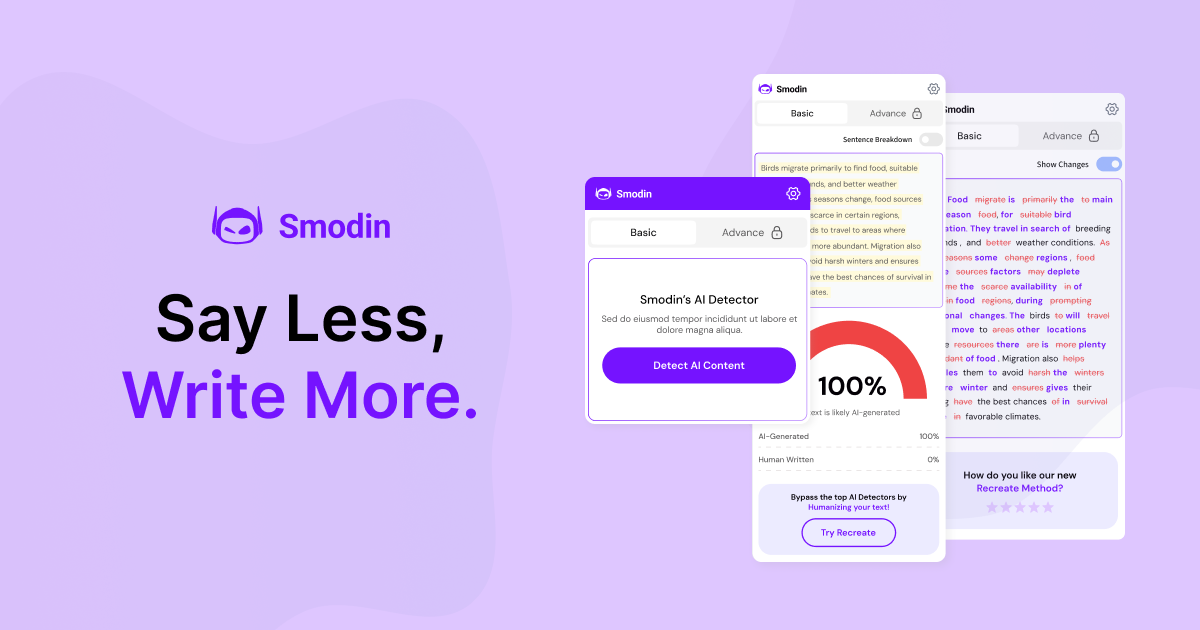
The overview
What Smodin AI Detector is for
1Core Capabilities
- Multi-language AI text detection with per-run risk outputs so English and non-English submissions can be assessed from the same workflow
- Passage-level highlight-style signals that identify specific stretches of text worth questioning instead of rejecting an entire piece blindly
- Configurable thresholding logic that lets teams route submissions into different decision lanes (quick pass, manual review, or hold)
- Batch-oriented checks for groups of documents, enabling moderation teams to process campaign batches or category queues in one pass
- Structured, operator-friendly result formatting that supports internal review notes, ticketing systems, and audit trails
Who it helps
Useful ways to use Smodin AI Detector
A practical path
Define your risk thresholds by content type
Set separate acceptance rules for marketing copy, how-to guides, and reviews because AI-like patterns differ by genre and expected phrasing style.
External signals
Reviews & reputation
Aggregated review score
Smodin AI Detector performs best when teams prioritize clear task execution and operational repeatability and keep ownership explicit around repeatable team usage.
Quick answers
Frequently asked questions
1How many languages can be checked effectively?⌄
The tool supports multiple languages, but effective reliability varies by language and content length. Test a small sample set in each target language before committing production thresholds.
2Can this alone prove a text is or is not AI-generated?⌄
No. It is a probabilistic signal. Use it as a review input and keep human judgment in the loop for publish, payment, or disciplinary decisions.
3What if a document is very short?⌄
Short passages usually offer fewer stylistic cues, so scores are often less stable. Treat short-input results as directional and confirm with additional context before final action.
4Does it handle heavily edited human text that still resembles AI style?⌄
Heavily edited drafts can still be flagged depending on remaining patterns. The practical approach is to treat flagged items as candidates for a quick manual authenticity spot-check, not immediate rejection.
5How does the tool fit into existing moderation systems?⌄
If it can export concise results and integrate by API or structured copy-paste workflows, teams can embed it into queue-based review without rebuilding the entire pipeline.
6Is it suitable for strict policy enforcement?⌄
It works better as part of a policy with human override than as a hard gate. Use clear rules for escalation and keep documentation for appeals to reduce inconsistency.
Keep exploring