

What Is Spocket Used For: Features, Reviews & Alternatives
US and EU dropshipping suppliers.
Editorially updated Oct 25, 2025
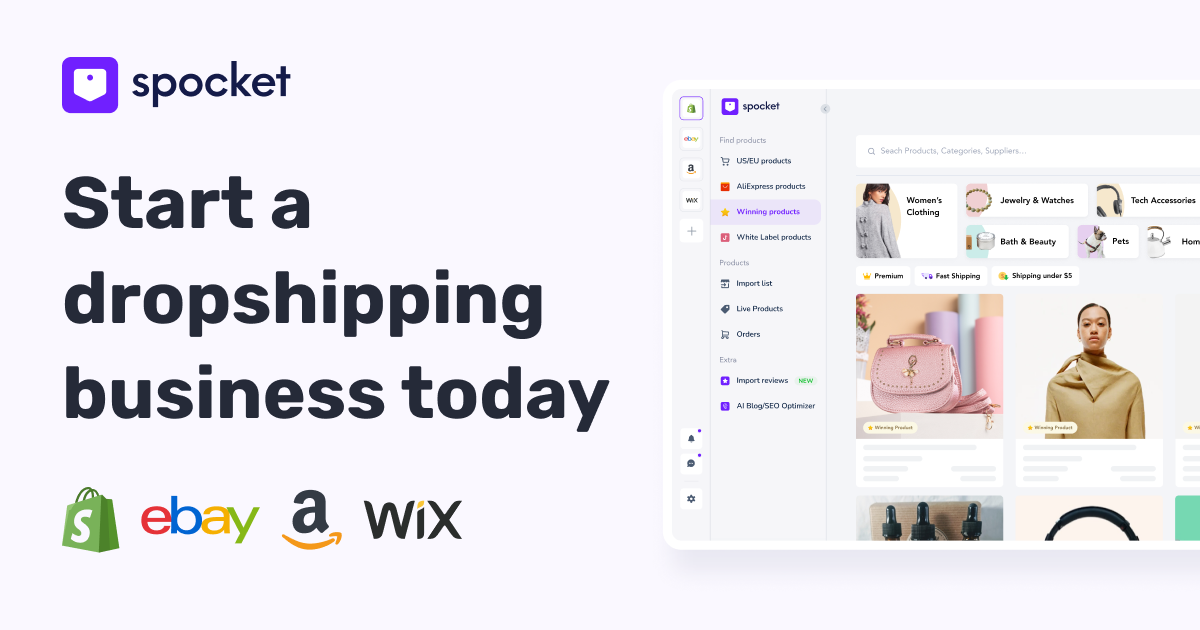
The overview
What Spocket is for
1Core Capabilities
- Curated US and EU supplier directory with stock visibility and product details for faster qualification before listing
- Category and shipping filters (including location and price ranges) to narrow products for specific niche expectations
- Product import paths aimed at common eCommerce stacks, enabling faster store listing without manually rebuilding every SKU
- Supplier rating and policy visibility to reduce supplier surprise during first test orders
- Margin-focused checks like pricing, shipping expectations, and potential fulfillment timing to support early SKU decisions
- Order forwarding and fulfillment basics built for the typical dropshipping fulfillment handoff, with room for manual quality monitoring
Who it helps
Useful ways to use Spocket
A practical path
Pick one profit model and region
Define whether you are testing US-only, EU-only, or mixed fulfillment demand so sourcing time is focused on the market that matches your audience.
External signals
Reviews & reputation
Aggregated review score
Spocket performs best when teams prioritize clear task execution and operational repeatability and keep ownership explicit around repeatable team usage.
Quick answers
Frequently asked questions
1Does Spocket focus only on US and EU suppliers, or are other markets included?⌄
The primary positioning is US and EU sourcing, which is useful if you sell where buyers expect shorter shipping times and clearer returns. For exact coverage, check the current marketplace list before finalizing your sourcing strategy.
2Is it mainly for beginners or for operators running multiple stores?⌄
It can work for both, but it is most practical when you already have a sourcing decision process. New operators get speed; experienced operators get a cleaner compare-and-test surface for faster SKU replacement.
3How reliable are suppliers once volume increases?⌄
Reliability is supplier-specific, not platform-wide. The practical way to judge it is by running the first paid micro-run and reviewing fulfillment behavior, communication, and stock consistency over multiple SKUs.
4Can it help if I am testing one-off trendy products?⌄
Yes for short-cycle testing, as long as you prioritize products with strong supplier visibility and fast verification steps. Use conservative budget controls because sourcing speed and fulfillment quality can vary by product category.
5What should I check before depending on a supplier long term?⌄
Check fulfillment speed claims, policy language, return handling, and support responsiveness. Then compare one successful and one failed order window before committing your top sellers to long-term promotion.
Keep exploring