

What Is Tandem Used For: Features, Reviews & Alternatives
Language exchange app & community.
Editorially updated Oct 5, 2025
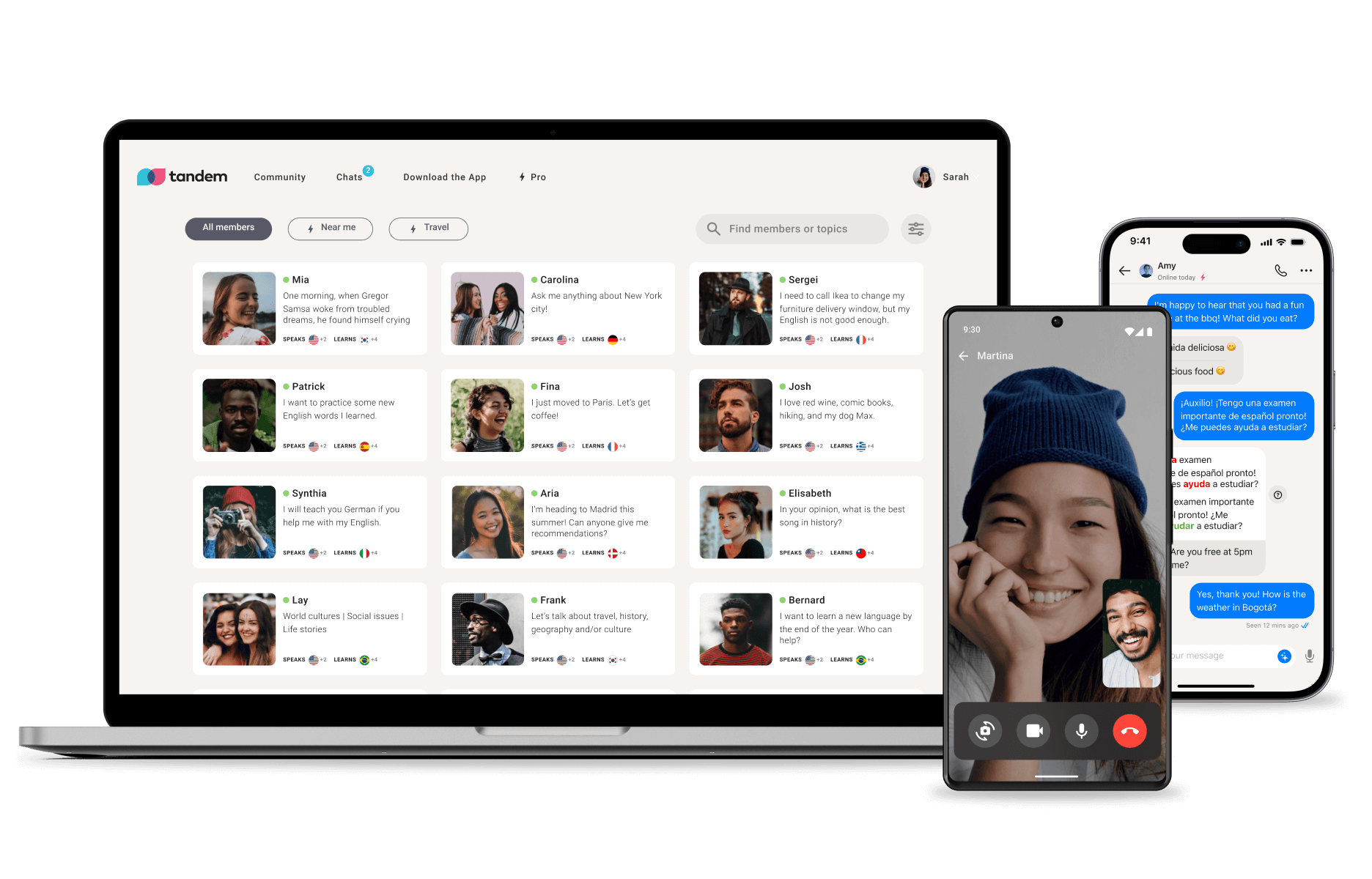
The overview
What Tandem is for
1Core Capabilities
- Level-targeted matching by proficiency band and target goals to reduce low-fit practice sessions
- Text, voice, and live video exchange options for integrated fluency, listening, and pronunciation work
- Conversation prompts and topic cards that help force structure instead of random small talk
- Community and tutor paths that support both peer practice and guided sessions
- Session history, notes, and partner feedback loops that can be reused to study difficult grammar points again
Who it helps
Useful ways to use Tandem
A practical path
Define the competence goal before opening the app
Set a concrete outcome for the week (for example, B1 small-talk, B2 business update, or interview Q&A) and choose target language pairs and level band.
External signals
Reviews & reputation
Aggregated review score
This pass shows Tandem fitting strongest workflows where high-volume discussion participation quality is measurable and abuse control and response speed controls are documented.
Quick answers
Frequently asked questions
1Is Tandem suitable as a main curriculum or a practice companion?⌄
It is strongest as a practice companion. Learners usually get better outcomes when they combine it with a defined syllabus or textbook sequence for grammar and reading.
2How controlled is the practice quality across sessions?⌄
Quality varies by partner and topic. Tandem helps with matching and scheduling, but consistency depends on your filters, partner selection, and pre-set session goals.
3Can I use it for less-commonly taught languages?⌄
Coverage differs by language and active user base. You should test availability and active peer volume for your exact language pair before relying on it for daily sessions.
4Will it help with repeated study over time?⌄
Only if you force repetition deliberately. The platform itself enables reuse, but retention comes from your cadence, review notes, and recurring problem-pattern focus.
5What should I watch out for in the first month?⌄
Early weeks often reveal a weak-to-strong variance in partner style and correction quality, so evaluate at least 5–8 sessions before judging fit.
Keep exploring